.png?width=250&height=177&name=Untitled%20(1).png)
Insulation Removal in Naples FL — When You Need It and What It Costs (2026)

Ideal Insulation
When Does Insulation Actually Need to Come Out?
Most homeowners in Naples don't think about their insulation until something goes wrong. And by "wrong," we usually mean one of three things: water got in, critters moved in, or the AC bill went through the roof and nobody can figure out why.
We remove insulation in Collier, Lee, and Charlotte county homes pretty regularly — probably 3-4 jobs a week. After 12 years of doing this in Southwest Florida, here's what we've learned about when removal is actually necessary versus when people are overthinking it.
The 5 Signs You Need Insulation Removed
1. Water Damage
This is the big one down here. A roof leak during hurricane season, a burst pipe, even persistent condensation from an undersized AC system — any of these can soak fiberglass batts. And wet fiberglass is worse than no insulation at all. It compresses, loses its R-value, and becomes a breeding ground for mold within 48-72 hours in Florida humidity.
If your insulation got wet and wasn't dried within 48 hours, it needs to come out. Period. There's no "drying it out" once mold sets in.
2. Mold Growth
Florida's humidity makes mold a constant threat. We've pulled insulation out of attics in East Naples and Golden Gate where the homeowner had no idea mold was growing above their heads. The signs: musty smell in certain rooms, unexplained allergies getting worse, or visible discoloration on attic-side drywall.
You can't spray over moldy insulation. You can't encapsulate it. It has to come out, the cavity has to be treated, and then you start fresh.
3. Rodent or Pest Contamination
Rats, mice, squirrels, raccoons — they love fiberglass batts. They nest in it, urinate on it, and leave droppings throughout. We see this a lot in older homes near the Everglades fringe and in Bonita Springs neighborhoods backing up to preserves.
Pest-contaminated insulation is a health hazard. The urine soaks in and you can't clean it. Removal is the only real fix, followed by sealing entry points and reinstalling fresh insulation.
4. Old, Settled, or Degraded Insulation
Blown-in fiberglass and cellulose settle over time. A lot. What was R-30 when installed 20 years ago might be R-12 now. We've measured attics in older Naples homes — Park Shore, Pelican Bay, even some newer construction in Ave Maria — where the insulation had settled to half its original depth.
If your insulation is visibly thin, compressed, or has bare spots, removal and replacement makes more sense than just blowing more on top. Layering over degraded material traps moisture and creates uneven thermal performance.
5. Pre-Spray Foam Upgrade
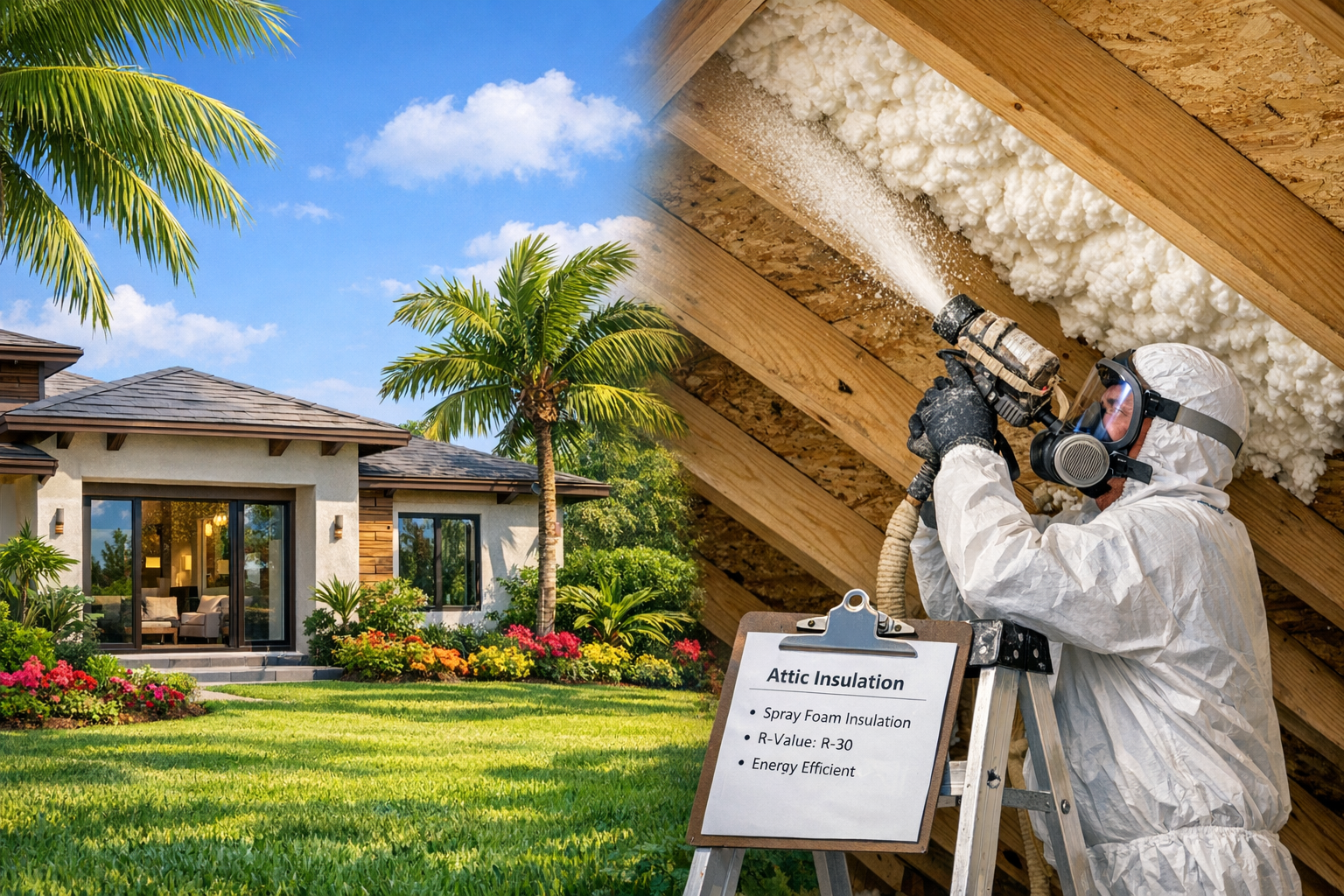
If you're upgrading to spray foam insulation, the old material has to come out first. Spray foam needs direct contact with the substrate (roof decking, wall sheathing) to create a proper air seal. Spraying over old batts defeats the purpose — you get gaps, moisture pockets, and reduced adhesion.
What Insulation Removal Actually Involves
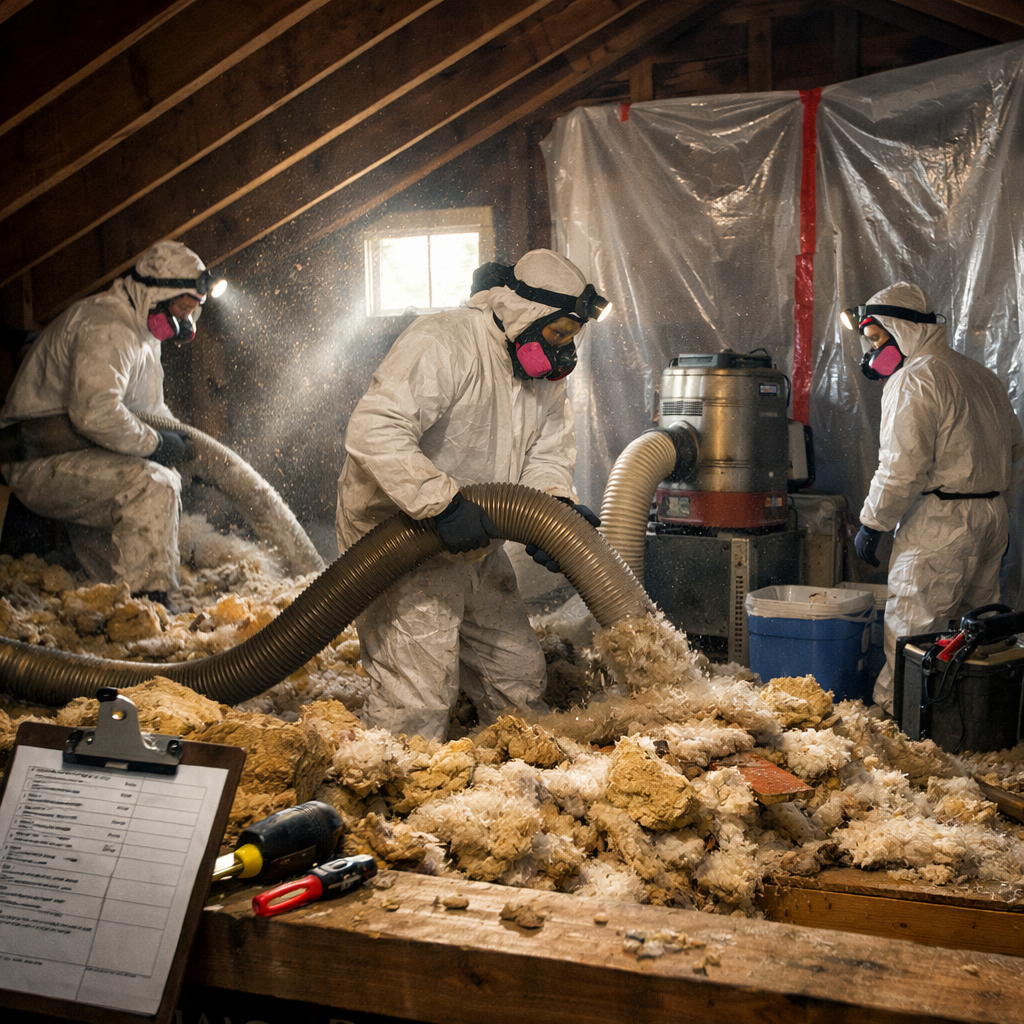
It's not a glamorous job. Here's the honest process:
- Assessment: We inspect the attic or crawl space, identify the insulation type, check for hazards (asbestos in pre-1980 homes, mold, pests), and measure the area.
- Containment: We seal off the work area from your living space. This matters — you don't want fiberglass particles or mold spores circulating through your AC system.
- Removal: For blown-in, we use industrial vacuum equipment that sucks it directly into bags outside. For batts, it's manual removal in sections. Both methods are dusty, hot work in a Florida attic.
- Cleanup: After removal, we clean the cavity — vacuuming residual material, treating for mold if present, and inspecting the structure for any damage.
- Reinstallation: Once the cavity is clean and dry, we install new insulation. For most Naples homes upgrading from old fiberglass, we recommend open cell spray foam in the attic — it air seals and insulates in one step.
What Does Insulation Removal Cost in Naples?
Removal pricing depends on the type of insulation, accessibility, and whether there are hazards involved:
- Standard blown-in removal (attic): $1.00–$2.00 per square foot
- Batt removal (attic): $0.75–$1.50 per square foot
- Contaminated removal (mold/pest): $1.50–$3.00 per square foot (includes treatment)
- Typical 1,500 sq ft attic: $1,500–$4,500 depending on conditions
These removal-specific prices are industry estimates for SWFL. Contact us for an exact quote based on your situation.
The Florida Code Angle Most People Miss
Naples sits in IECC Climate Zone 1. Under the Florida Building Code (FBC 8th Edition, 2023), a vented attic requires minimum R-30 insulation. But here's what most homeowners don't know: if you go with spray foam in an unvented attic assembly, FBC Section R806.5 allows R-20 — as long as you hit less than 3 ACH50 on a blower door test and have mechanical ventilation.
That's a significant cost difference. R-20 with open cell spray foam is about 5.5 inches (open cell is approximately R-3.7 per inch). R-30 with the same material would need over 8 inches. We help homeowners navigate which path makes sense for their specific situation and budget.
Can You Remove Insulation Yourself?
Technically, yes. Realistically? We don't recommend it for most Naples homeowners. Here's why:
- Attic temperatures: SW Florida attics regularly hit 140-150°F in summer. Heat exhaustion is a real risk.
- Fiberglass exposure: Without proper PPE (respirator, not just a dust mask, plus full body coverage), fiberglass particles irritate skin, eyes, and lungs.
- Mold risk: If you don't know what you're looking at, you could disturb mold and spread spores throughout your home.
- Asbestos: Homes built before 1980 may have asbestos-containing insulation. Disturbing it without proper abatement is illegal and dangerous.
- Equipment: Proper removal requires industrial vacuum equipment.
What to Replace It With
After removal, you've got a clean slate. For most Naples homes, we recommend:
- Open cell spray foam for standard attics — R-3.7 per inch, excellent air sealing, handles Florida humidity well. Five inches gives you about R-18.5, and in an unvented assembly you can meet code at R-20 (about 5.5 inches).
- Closed cell spray foam for crawl spaces, exterior walls, or anywhere moisture intrusion is a concern — R-6.5 to R-7.0 per inch, doubles as a vapor barrier, adds structural rigidity. Three inches gets you to about R-19.5 to R-21.
- Blown-in fiberglass as a budget option for vented attics — cheaper upfront but doesn't air seal and will settle over time. You'll need R-30 worth (about 10-11 inches of blown fiberglass).
FAQ — Insulation Removal Questions
How long does insulation removal take?
Most residential attic removal jobs take 4-6 hours. If we're also reinstalling spray foam the same day, plan for a full day. Larger homes or contaminated jobs may take two days. We have 9 trucks and 20 certified installers, so we don't keep you waiting for scheduling.
Do I need to leave the house during removal?
We recommend it during the actual removal, especially if there's mold or pest contamination involved. The containment keeps most debris out of your living space, but the noise and vibration aren't exactly pleasant. Most customers run errands or work from a coffee shop for the morning and come back to a clean attic.
Can you remove spray foam insulation?
Yes, but it's harder than removing batts or blown-in. Spray foam adheres to the substrate, so removal involves scraping or grinding. It's more labor-intensive and therefore more expensive — typically 2-3x the cost of standard removal. The good news: spray foam rarely needs removal. It doesn't settle, doesn't absorb water the way fiberglass does, and lasts the lifetime of the structure.
Is insulation removal covered by insurance?
If the removal is due to a covered event — hurricane damage, burst pipe, fire — your homeowner's insurance typically covers removal and replacement. We work with insurance adjusters regularly and can help document the damage. We also accept insurance claims directly and offer 24-hour emergency response for urgent insulation removal needs.
What about the old insulation — where does it go?
We bag everything on-site and dispose of it at licensed facilities. Contaminated material (mold, asbestos) goes to specialized disposal sites per Florida DEP regulations. You won't have bags of old insulation sitting in your driveway.
Get a Free Assessment
Not sure if your insulation needs to come out? We offer free thermal leak scans — a $199 value — that show you exactly what's happening in your attic. No pressure, no obligation. We've been serving Naples, Bonita Springs, and all of Southwest Florida since 2013, and we'll give you an honest answer even if the answer is "your insulation is fine."
Give us a call or schedule your free scan online.
