.png?width=250&height=177&name=Untitled%20(1).png)
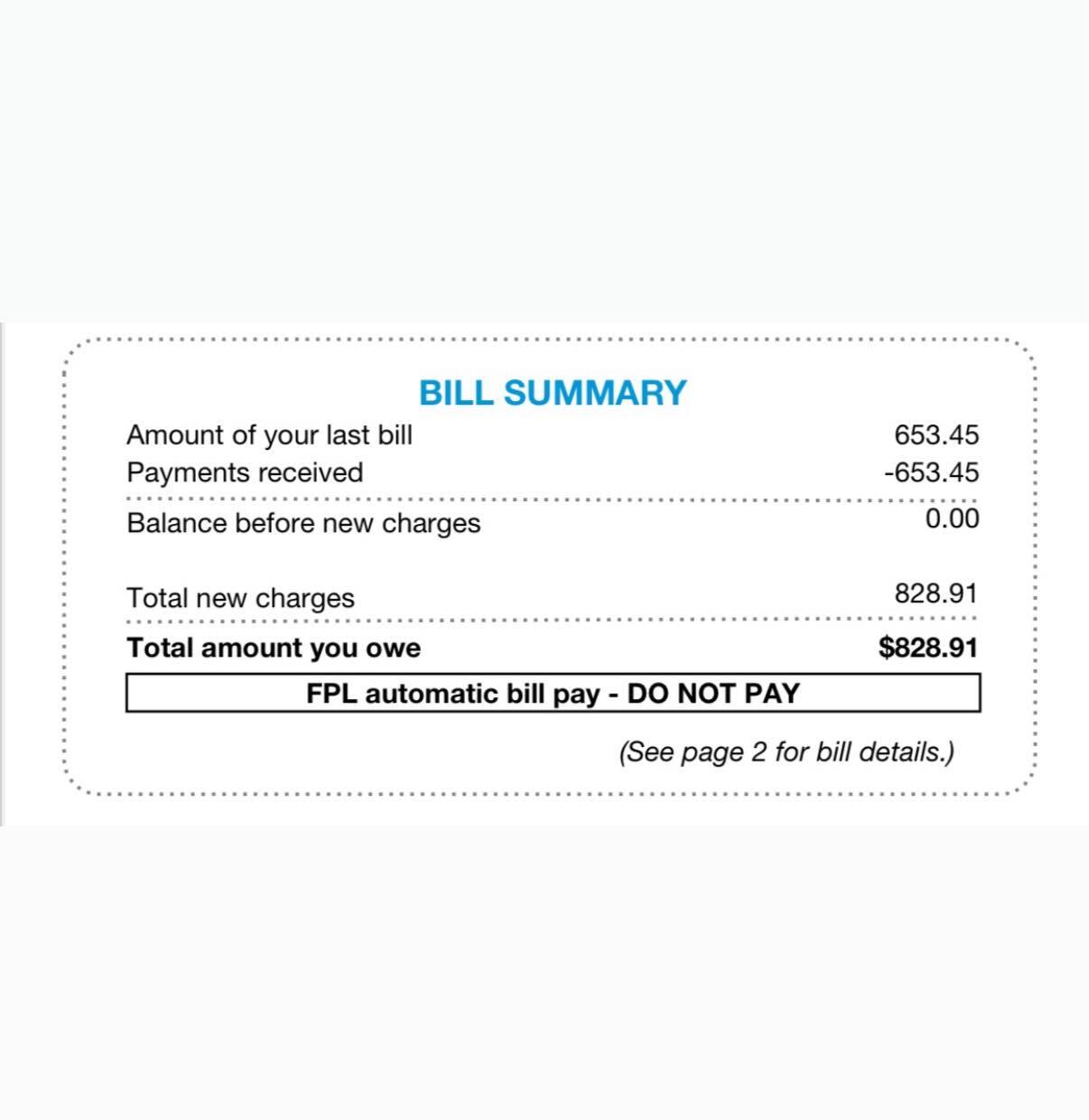

Your FPL bill just hit $340. Again. You turned the thermostat up to 78, kept the blinds closed, even replaced the air filter last month. And still — that number keeps climbing every summer like clockwork.
If you're a Naples homeowner watching money drain through your electricity bill, you're not imagining things. Spray foam insulation cuts electric bills in Naples FL because it attacks the root problem most homeowners never think about: your home's thermal envelope is leaking conditioned air like a sieve.
We're not going to give you the standard "turn off lights and unplug chargers" advice. That saves you $8 a month. Instead, this guide breaks down exactly how insulation — specifically spray foam — reduces your cooling costs by addressing the single biggest energy drain in a Southwest Florida home: your attic.
Why Naples Homeowners Pay So Much for Electricity
It's not just your house. Collier County residents consistently pay some of the highest electric bills in the state, and it comes down to three factors working against you simultaneously.
The climate is relentless. Naples averages 90°F+ temperatures from May through October, with humidity regularly hitting 80-90%. Your AC doesn't just cool the air — it's dehumidifying thousands of cubic feet every hour. That's an enormous energy load that homeowners in, say, Charlotte or Nashville never deal with at this scale.
FPL rates keep ticking upward. The Florida Public Service Commission approved FPL's latest rate structure in late 2025, bringing the typical 1,000-kWh residential bill to about $136.64 per month in 2026. But that's for 1,000 kWh — the "typical" customer. Most Naples homes with families run 1,500-2,500 kWh in summer months, pushing bills well past $250.
Your home probably wasn't built for today's energy costs. A huge portion of Collier County's housing stock went up during the 2000s building boom. Those homes met the minimum code requirements at the time — but minimum code from 2004 is nowhere near what a Florida home actually needs for energy efficiency in 2026. Many of these homes have R-19 attic insulation (or less) that's compressed, settled, or damaged after two decades of Florida heat, humidity, and the occasional hurricane.
How Insulation Actually Affects Your Electric Bill
Here's the part most people get wrong. They think insulation is about "keeping heat out." It's more accurate to say insulation controls where heat goes — and more importantly, how fast it gets there.
Your home has what building scientists call a thermal envelope. That's the boundary between your conditioned living space and the unconditioned outside. Every wall, ceiling, floor, window, and door is part of this envelope. And every gap, thin spot, or poorly insulated area in that envelope is a highway for heat to pour in.
In Naples, the biggest offender is almost always the attic. On a typical July afternoon, your attic temperature hits 140-160°F. If the insulation between that superheated attic space and your living area below is thin, compressed, or has gaps — that heat radiates straight down into your rooms. Your AC fights it constantly. And you pay for every minute of that fight.
The Air Sealing Factor Most People Miss
Traditional insulation (fiberglass batts, blown-in cellulose) slows heat transfer. That's its job. But it does almost nothing to stop air movement. And in a Florida home, air leakage is responsible for a shocking amount of energy waste.
Think about it this way: your house has dozens of penetrations — recessed lights, electrical outlets, plumbing chases, HVAC ducts, attic hatches. Each one is a potential pathway for hot, humid attic air to seep into your conditioned space. You can pile fiberglass batts over a recessed light can all day long — hot air still pushes right through the gaps around it.
This is where spray foam insulation changes the equation. It doesn't just insulate — it air seals at the same time. When spray foam expands, it fills every crack, gap, and penetration in the surface it's applied to. You get insulation AND an air barrier in a single application. No other insulation type does both.
Spray Foam vs. Other Insulation: An Honest Comparison for Florida Homes
We install every type of insulation — spray foam, blown-in fiberglass, and batts. Each has its place. But for energy savings specifically, here's how they actually stack up in a Southwest Florida climate:
| Feature | Open-Cell Spray Foam | Closed-Cell Spray Foam | Blown-In Fiberglass | Fiberglass Batts |
|---|---|---|---|---|
| R-Value Per Inch | ~R-3.7 | ~R-6.5 to R-7.0 | ~R-2.5 to R-3.0 | ~R-3.0 to R-3.7 |
| Air Sealing | Yes — excellent | Yes — superior | No | No |
| Moisture Barrier | Partial (vapor permeable) | Yes (Class II vapor retarder at 2"+) | No | No |
| Settles Over Time? | No | No | Yes — loses R-value | Yes — compresses |
| Best Use in FL Homes | Attics (unvented), walls | Crawl spaces, rim joists, moisture-prone areas | Attic floors (vented attics) | New construction walls |
| Humidity Control | Good | Excellent | Poor | Poor |
The R-value numbers matter, but they don't tell the whole story. A blown-in attic at R-30 with air leaks around can lights and plumbing chases performs significantly worse in the real world than its R-value suggests. Spray foam at the same R-value — with its air sealing built in — delivers something much closer to its rated performance.
That gap between "lab R-value" and "real-world performance" is exactly why homeowners who switch to spray foam often see bigger energy savings than they expected.
Real Energy Savings Numbers: What the Data Actually Says
We're careful about savings claims because every home is different. But the data from ENERGY STAR and the U.S. Department of Energy gives us a solid baseline.
According to ENERGY STAR's methodology, homeowners who air seal and add insulation to a typical existing home can expect to save an average of 15% on heating and cooling costs nationwide. For homes in IECC Climate Zone 1 — which is where Naples and all of Southwest Florida sit — the estimated savings from standard air sealing and insulation upgrades are about 7% on heating and cooling costs.
Wait — only 7%? That sounds low. Here's the context that matters.
Those ENERGY STAR numbers assume standard insulation upgrades — basically adding blown-in fiberglass to attics and doing some caulking around obvious air leaks. They don't model the full air sealing that spray foam provides. When you eliminate air leakage across the entire attic plane (not just patch a few obvious spots), real-world savings in hot-humid climates like ours consistently exceed those baseline numbers.
Our experience across hundreds of SWFL homes — and this tracks with Department of Energy research on spray foam specifically — is that homeowners with inadequate existing insulation typically see 20-40% reductions in their cooling costs after a full spray foam upgrade. The exact number depends on your home's age, existing insulation condition, HVAC system efficiency, and overall air tightness.
What does that look like in dollars? For a Naples homeowner spending $280/month on FPL during summer:
- 20% reduction = roughly $56/month savings ($336/year during peak months)
- 30% reduction = roughly $84/month savings ($504/year during peak months)
- 40% reduction = roughly $112/month savings ($672/year during peak months)
And these savings aren't just summer-only. Better insulation moderates your home year-round, including those January mornings when you're running the heat at 6 AM and it's 45°F outside.
The Payback Period: How Fast Does Spray Foam Pay for Itself?
This is the question every homeowner asks, and honestly, it's the right question. Spray foam costs more upfront than traditional insulation. So when does the math start working in your favor?
We can't quote a universal payback period because every project is different. The factors that move the needle the most:
- Your current insulation situation. A home with R-11 in the attic (or damaged/compressed insulation) will see dramatically bigger savings than one that already has R-30 blown-in. The worse your starting point, the faster the payback.
- Home size and layout. A 2,500 sq ft two-story home with a large attic footprint has more surface area losing energy than a 1,200 sq ft single-story.
- Your HVAC system's age and efficiency. An older system (10+ years) working against poor insulation is burning electricity at a staggering rate. Upgrading insulation lets that system (or its replacement) actually work at design efficiency.
- How much you're currently spending. If your FPL bills are already $350+ in summer, even a 25% reduction adds up fast.
For most Naples homeowners, the typical payback window falls between 3-7 years depending on these variables. After that, the savings are pure profit — every month, for the life of the home. And unlike an AC unit that needs replacing in 12-15 years, spray foam doesn't degrade. It's a permanent upgrade.
FPL Rebates and Tax Credits for Insulation Upgrades in 2026
Here's where the math gets even better. Two programs can offset a portion of your insulation upgrade cost right now.
FPL Ceiling Insulation Rebate — $220 Instant Credit
FPL offers an instant $220 rebate when you upgrade your ceiling insulation through one of their approved Participating Independent Contractors (PICs). Ideal Insulation is an FPL Preferred Insulation Contractor, which means we can apply this credit directly to your invoice — no paperwork headaches, no waiting for a check.
To qualify, your home's existing ceiling insulation needs to have a current R-value below R-8 (per FPL's program requirements). If your insulation is degraded, damaged, or was minimal to begin with, you likely qualify. We check this during every evaluation — it takes about two minutes in the attic to measure.
Federal Energy Efficient Home Improvement Credit (Section 25C)
The Inflation Reduction Act extended a federal tax credit for home insulation upgrades. Under Section 25C, you can claim 30% of qualifying insulation material costs, up to $1,200 per year. This applies to spray foam, blown-in, batts — any insulation that meets the applicable ENERGY STAR requirements.
This isn't a rebate — it's a direct credit on your federal taxes. If your insulation materials cost $3,000, that's a $900 tax credit. Combined with the FPL rebate, you could offset $1,100+ of your project cost before your energy savings even start.
Talk to your tax professional about eligibility. We provide all the documentation you need at project completion.
Best Areas to Insulate in a Florida Home (In Order of Impact)
Not every insulation upgrade delivers the same bang for your buck. In a Southwest Florida home, here's where your dollars work hardest — ranked by energy impact:
1. The Attic — This Is Where You Start
No question about it. The attic is the single biggest source of heat gain in a Florida home. Remember that 140-160°F attic temperature we mentioned? That heat is your AC's worst enemy.
Under the Florida Building Code 8th Edition (2023), IECC Climate Zone 1 requires a minimum R-30 for vented attic assemblies. For unvented attic assemblies with spray foam, R-20 is accepted under FBC Section R806.5, provided the home achieves less than 3 ACH50 on a blower door test and has mechanical ventilation. That R-20 spray foam outperforms R-30 fiberglass in practice because of the air sealing component.
If your home was built before 2010, there's a good chance your attic insulation is below current code requirements — and even if it met code at the time, twenty years of Florida heat and humidity have likely degraded it.
2. Exterior Walls
Walls are the second-largest surface area of your thermal envelope. Florida code requires a minimum R-13 for walls. In existing homes, retrofitting wall insulation is more involved than attic work, but it makes a measurable difference — especially in homes with little or no wall insulation (more common than you'd think in older Naples homes, particularly pre-1990 construction in neighborhoods like East Naples, Golden Gate Estates, and parts of North Naples).
3. Crawl Spaces and Raised Foundations
Many SWFL homes, particularly older ones near the coast (Aqualane Shores, Old Naples, parts of Marco Island), sit on raised foundations with crawl spaces. An uninsulated crawl space is basically an open invitation for hot, humid air to push into your floor system from below. Closed-cell spray foam is the go-to solution here because it handles both insulation and moisture management in a single application.
4. Garage Walls (Attached Garages)
If your garage shares a wall with your living space — and in most Naples subdivisions it does — that wall is often uninsulated or underinsulated. Your garage easily hits 120°F+ in summer. That heat transfers directly through the shared wall into your bedrooms, family rooms, or kitchens. Insulating the shared wall is one of the most cost-effective comfort upgrades we do.
Signs Your Current Insulation Is Failing
Insulation doesn't fail all at once. It's a slow decline, which is exactly why most homeowners don't realize it's the problem. Here's what to watch for:
Your FPL bills keep climbing even though nothing else changed. You didn't get a bigger house. You didn't change your thermostat habits. Your AC is the same age as last year. But your bill is $40-60 higher than the same month a year ago. Degraded insulation is one of the most common culprits.
Rooms upstairs are noticeably hotter than downstairs. Heat rises, and if your attic insulation has settled, compressed, or been damaged (rodents love fiberglass, and Florida has plenty of them), that second floor becomes an oven. You crank the AC down to compensate, and your system runs overtime trying to cool the whole house to match.
Your AC runs constantly but never seems to catch up. On a 95°F afternoon, a well-insulated Naples home should cycle the AC — running for a while, reaching setpoint, and shutting off before cycling again. If your system runs almost nonstop from noon to 8 PM, your thermal envelope is compromised. The system can't keep up because heat is entering faster than it can remove it.
You can feel warm spots on ceilings or walls. Put your hand flat on an interior ceiling below the attic on a hot afternoon. If it feels noticeably warm, heat is radiating through. In a properly insulated home, that ceiling should feel close to room temperature.
Your insulation is visible and looks wrong. Pop your head into the attic with a flashlight. If you can see the tops of the ceiling joists, your insulation has settled below the minimum depth. If it looks discolored, clumped, or has gaps — especially around HVAC equipment, ductwork, or penetrations — it's not performing as rated. And if you see evidence of rodent activity (droppings, tunnels, nesting), that insulation has been compromised and likely needs removal and replacement.
Why We Guarantee the Results
Ideal Insulation has been insulating homes across Collier, Lee, and Charlotte counties for over 12 years. We run 9 trucks with 17 trained installers — this isn't a side hustle. Insulation is all we do, every day.
As an FPL Preferred Insulation Contractor, we meet a higher standard than the industry minimum. FPL doesn't hand that designation out freely. It means our materials, installation practices, and quality standards have been vetted by the utility company itself.
We're confident enough in our work that we guarantee a measurable reduction in your energy bills after spray foam insulation. Not a vague "you might save some money" — a real, noticeable drop in what FPL charges you every month.
Every project starts with a thorough evaluation of your home's current thermal envelope. We check existing insulation levels, identify air leakage paths, evaluate your ductwork and HVAC setup, and give you an honest recommendation. Sometimes spray foam is the answer. Sometimes blown-in fiberglass makes more sense for your budget and situation. We'll tell you straight.
Frequently Asked Questions
How much can I actually save on my electric bill with spray foam insulation?
It depends on your home's current condition, but most Naples homeowners see a 20-40% reduction in cooling costs after a full spray foam upgrade. Homes with severely degraded or missing insulation see the biggest improvements. The U.S. Department of Energy and ENERGY STAR estimate that proper air sealing and insulation can save homeowners an average of 15% on heating and cooling costs nationally.
Is spray foam insulation worth it in Florida, or is blown-in enough?
Both work, but they solve different problems. Blown-in fiberglass is excellent for adding R-value to a vented attic at a lower cost per square foot. Spray foam costs more but provides both insulation and air sealing in one step — which means it typically delivers better real-world energy performance, especially in homes with significant air leakage. For most Florida homeowners, the best approach depends on your specific situation and budget. We install both and recommend honestly based on what your home actually needs.
Does FPL offer rebates for spray foam insulation?
FPL currently offers a $220 instant rebate for ceiling insulation upgrades when the work is performed by an approved Participating Independent Contractor (PIC). Your existing insulation must have an R-value below R-8 to qualify. As an FPL Preferred Insulation Contractor, Ideal Insulation can apply this rebate directly to your project invoice. You may also qualify for a federal tax credit of up to $1,200 under Section 25C of the IRS code.
How long does spray foam insulation last in a Florida home?
Spray foam doesn't degrade, settle, or lose R-value over time the way fiberglass can. Once it's properly installed, it's a permanent part of your home's structure. There are no filters to change, no maintenance required, and no replacement cycle. It's one of the few home upgrades that truly lasts the lifetime of the house.
What R-value does my Florida home need?
Under the Florida Building Code 8th Edition (2023), Naples and all of SWFL fall in IECC Climate Zone 1. For vented attic assemblies, the minimum is R-30. For unvented assemblies using spray foam applied directly to the roof deck, R-20 is accepted under FBC Section R806.5 (with blower door testing and mechanical ventilation requirements). Walls require a minimum R-13.
Stop Overpaying FPL — Get Your Free Energy Assessment
Every month you wait is another month of overpaying for electricity your home is wasting. The fix isn't complicated. It starts with understanding exactly where your home is losing energy — and that's exactly what our free assessment shows you.
We'll evaluate your attic insulation depth and condition, check for air leakage paths, inspect your thermal envelope, and give you a clear, no-pressure recommendation with honest options for your budget. If spray foam is the right call, we'll explain why. If blown-in makes more sense, we'll tell you that instead.
Call Ideal Insulation at 239.455.2002 or request your free assessment online. We serve Naples, Fort Myers, Bonita Springs, Marco Island, Estero, and all of Collier, Lee, and Charlotte counties.
Spring is the smartest time to insulate — before the summer heat arrives and your FPL bill spikes. Most projects are completed in a single day.